
Keep it frozen. Keep it moving.
Frozen fish is only as good as the chain that carries it. See how NRB Foods approaches handling, cold storage and reefer transport so product reaches your cold store the way it left ours.
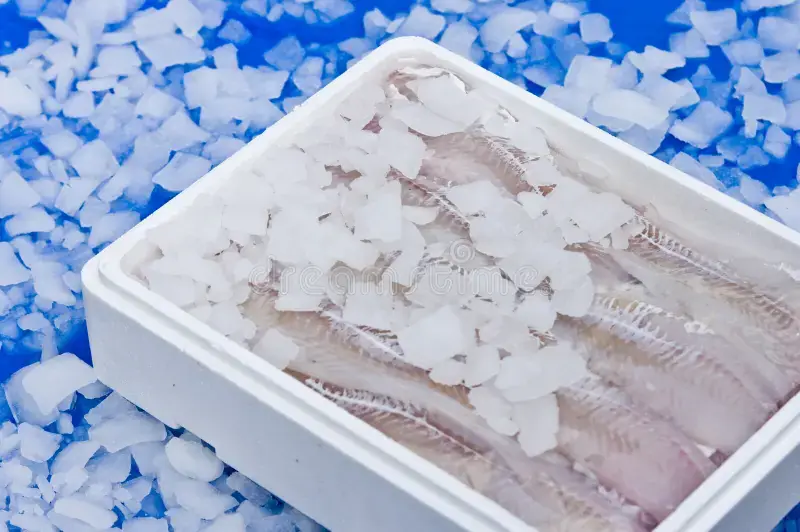
Freezing preserves quality. Only if the chain holds.
Freezing extends the usable life of seafood, but it does not repair damage. Every temperature rise between the freezer and the buyer’s cold store can cost texture, appearance and value.
- Slows spoilage. Very low temperatures slow the enzyme and microbial activity that degrade fish.
- Protects texture. Rapid freezing forms small ice crystals. Slow freezing forms large ones that damage the flesh.
- Prevents freezer burn. Stable temperature and good packaging stop surface dehydration.
- Avoids thaw and refreeze. Temperature swings regrow ice crystals and quietly lower quality.
The temperature journey.
Follow a carton of frozen fish from receipt to arrival. Select a stage, or let it play, and compare it with what a broken cold chain looks like.
Chilled on receipt
Illustrative profile for explanation only. Exact temperature specifications are agreed with each buyer.
Controlled chain, or broken chain.
The difference is rarely one big failure. It is a string of small ones.
Controlled
- Frozen quickly, stored at a steady temperature
- Reefer pre-cooled before loading
- Short door-open time, airflow kept clear
- Hard-frozen product, intact glaze
Broken
- Temperature swings in storage
- Warm container, long loading delays
- Cartons blocking return air
- Frost, soft spots, freezer burn
How a refrigerated container works.
Select a hotspot to see what each part does, and why correct loading matters as much as the machine.
Six habits that protect frozen cargo.
Pre-cool the container
A reefer should reach set temperature before loading starts, so cartons never meet a warm box.
Stow for airflow
Cartons are stacked so cold air can move through the T-floor and between the stacks.
Respect the load line
Never stacked above the marked line, so the return air path stays open.
Minimise door-open time
Loading is planned and rehearsed so doors are open for as short a time as possible.
Record the temperature
Reefer settings and, where available, logger data give a record of the voyage.
Rotate the stock
Older stock moves first, so product does not sit in cold storage longer than it needs to.
What happens at each checkpoint.
The same discipline, applied from receipt to the buyer’s door.
Receive
Chilled product arrives and is checked on receipt. Speed to the freezer is the priority.
Sort & grade
Hygienic sorting and grading with product kept cold and moving.
Rapid freeze
Fast freezing to protect texture, with the product core taken to the frozen target.
Cold storage
Stable frozen storage. Steady temperature beats occasional dips.
Pack
Cartons packed and labelled to specification without warming the product.
Load
Pre-cooled reefer, short door-open time, cartons stowed for airflow.
Transit
Continuous refrigeration at sea, with unit data available for review.
Arrive
Hard-frozen product handed to the buyer’s cold chain in sound cartons.
Frozen fish, answered.
What temperature should frozen fish be stored at?
Frozen fish is generally stored at −18°C or colder. The exact temperature specification is agreed per product and per buyer when we confirm your order.
Why does a stable temperature matter as much as a low one?
Temperature swings cause ice crystals inside the product to melt and regrow larger, which damages texture and dries the surface. A steady frozen temperature protects quality better than a cold store that fluctuates.
What is a reefer container?
A reefer is a refrigerated shipping container with its own cooling unit. It circulates cold air under and around the cartons for the whole voyage, so frozen seafood stays within its target temperature during ocean transport.
What is freezer burn and how is it avoided?
Freezer burn is dry, pale patches that appear when frozen product loses moisture at the surface. Stable cold storage and proper packaging, including an intact ice glaze where used, help prevent it.
Can frozen fish be thawed and refrozen?
Thawing and refreezing damages texture and quality, so product should stay frozen from our cold chain into the buyer’s cold chain. Heavy frost or large ice crystals inside a pack can be a sign of temperature abuse.
Can I review temperature records for my shipment?
Where temperature data is available from the reefer unit or data loggers, we can review it with you. Please mention this when you send your enquiry so we can plan it into the shipment.
Frozen supply, kept frozen.
Tell us the product, quantity and destination. We’ll reply with availability and trade terms.