
Ready for the journey.
From confirmed order to container handover: how NRB Foods prepares, documents and ships frozen fish and seafood to importers and distributors, with clear trade terms at every step.
From enquiry to handover, step by step.
Nine clear steps, and a clear owner for each one. Select a step to see what happens and who is responsible.
Tell us what you need
You send the product, quantity, packing requirement and destination, by form or WhatsApp. The clearer the brief, the faster the reply.
Availability and trade terms
We review availability and reply with pricing and the trade term, such as FOB, CFR or CIF, for your destination.
Specification confirmed
Product, size, packing, quantity, trade terms and payment arrangements are agreed in writing before anything moves.
Prepared to specification
Product is sorted, frozen, packed and labelled to the agreed specification and held in controlled cold storage until loading.
Trade paperwork prepared
The commercial invoice, packing list and any certificates the destination requires are prepared and checked against the product.
Reefer booked and loaded
A refrigerated container is booked, pre-cooled and set to temperature. Cartons are loaded quickly, stowed for airflow and the container is sealed.
Export clearance and gate-in
The container is cleared for export and moved to the port, then loaded on the vessel under the agreed trade term.
Ocean transit
The reefer unit keeps the cargo at temperature for the whole voyage while the shipping line carries it to the destination port.
Clearance and handover
The container arrives, the buyer clears import and duties, and frozen product is moved into the buyer’s cold chain.
Cold chain meets global logistics.
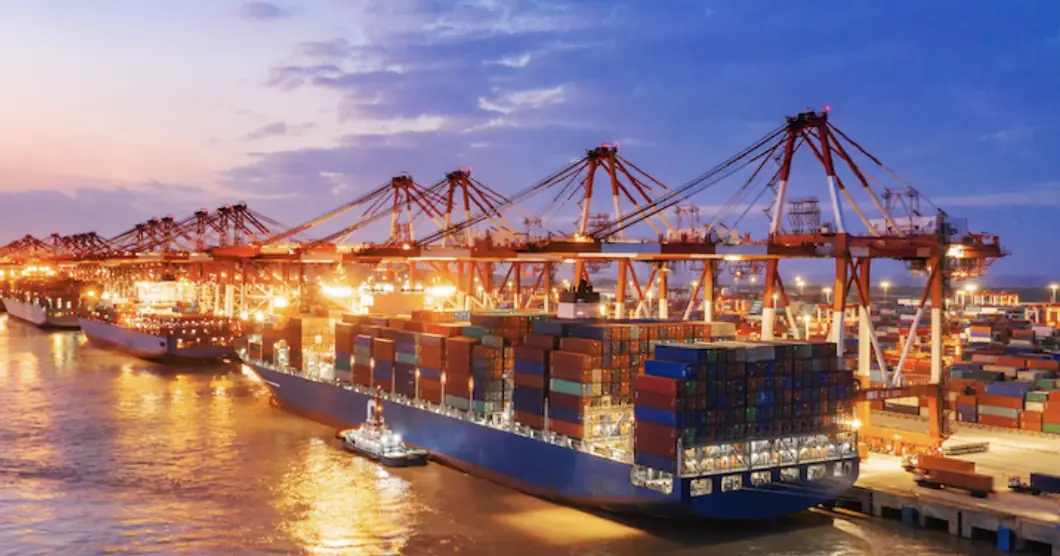
Once the reefer is sealed, the cold chain travels with it. The unit holds the set temperature while the container moves by truck, through the port and across the sea.
- Pre-cooled containers before the first carton goes in.
- Sealed and numbered, so the cargo can be matched to its documents.
- Refrigerated from the cold store to the destination port.
Who does what, and who carries the risk?
Incoterms® 2020 rules set out where costs and risk pass from seller to buyer. Pick a term to see the split along the journey.
| Term | Name | Risk passes | In short |
|---|---|---|---|
| EXW | Ex Works | Premises | Buyer arranges everything from the seller’s premises |
| FCA | Free Carrier | Handover to carrier | Seller clears for export and delivers to the buyer’s carrier |
| FOB | Free On Board | On board the vessel at origin | Seller delivers on board, export-cleared; buyer pays freight |
| CFR | Cost and Freight | On board the vessel at origin | Seller pays ocean freight to destination port |
| CIF | Cost, Insurance and Freight | On board the vessel at origin | As CFR plus minimum-cover cargo insurance |
| DAP | Delivered at Place | Named place of delivery | Seller delivers ready for unloading; buyer clears import |
For containerised cargo, FCA, CPT and CIP are often recommended, while FOB, CFR and CIF remain widely used in seafood trade. We agree the right term with you on the quotation.
Your export document pack.
Tick off a typical pack to see how a shipment’s paperwork builds up. Exact requirements depend on the destination country.
Sized to your order.
Frozen seafood ships in refrigerated containers. The right size depends on volume, product mix and your route.
20 ft reefer
For smaller commercial lots and trial orders.
- Good for first orders and shorter commitments
- Simpler for single product lines
- Availability confirmed per booking
40 ft reefer
For full container trade volume.
- Suited to regular, higher-volume buyers
- Room for multiple product lines
- Equipment depends on route and booking
Mixed & custom
Several products, one shipment.
- Combined lines where temperature allows
- Packing agreed with the buyer
- Feasibility confirmed on enquiry
Container details are indicative. Availability, size and equipment are confirmed for each booking.
Export questions, answered.
How does a frozen fish export order work with NRB Foods?
You send your product, quantity, packing and destination. We review availability and reply with a quotation and trade terms. Once the order is agreed we prepare the product and documents, book a refrigerated container and coordinate shipping to your destination port.
Which Incoterms do you work with?
Commonly discussed terms for frozen seafood include FOB, CFR and CIF for sea freight, plus FCA and DAP depending on the buyer. The term that suits you is agreed on the quotation, so tell us which one your team prefers.
What documents are needed to export frozen fish?
A typical set includes a commercial invoice, packing list and bill of lading, with a certificate of origin and health or sanitary certificate where the destination requires them. Requirements vary by country, so we confirm the exact list for your market when you enquire.
Do you ship in refrigerated containers?
Yes. Frozen seafood moves in refrigerated (reefer) containers that hold the set temperature for the whole voyage. Container size and availability are confirmed per booking.
Can I order a mixed container with several products?
Mixed product lines can often be combined in one container, depending on temperature requirements and supply. Tell us what you need and we confirm what is feasible.
Who handles import clearance at the destination?
Under most sea-freight terms such as FOB, CFR and CIF, import clearance, duties and local delivery are the buyer’s responsibility. Under DAP the seller delivers to the named place, but import clearance still stays with the buyer.
Ready to ship frozen?
Send your product, quantity and destination. We’ll reply with availability, terms and next steps.